
Lessons of 2026
Lesson No. Thirty-Three
The Grace of the Lord Jesus Christ
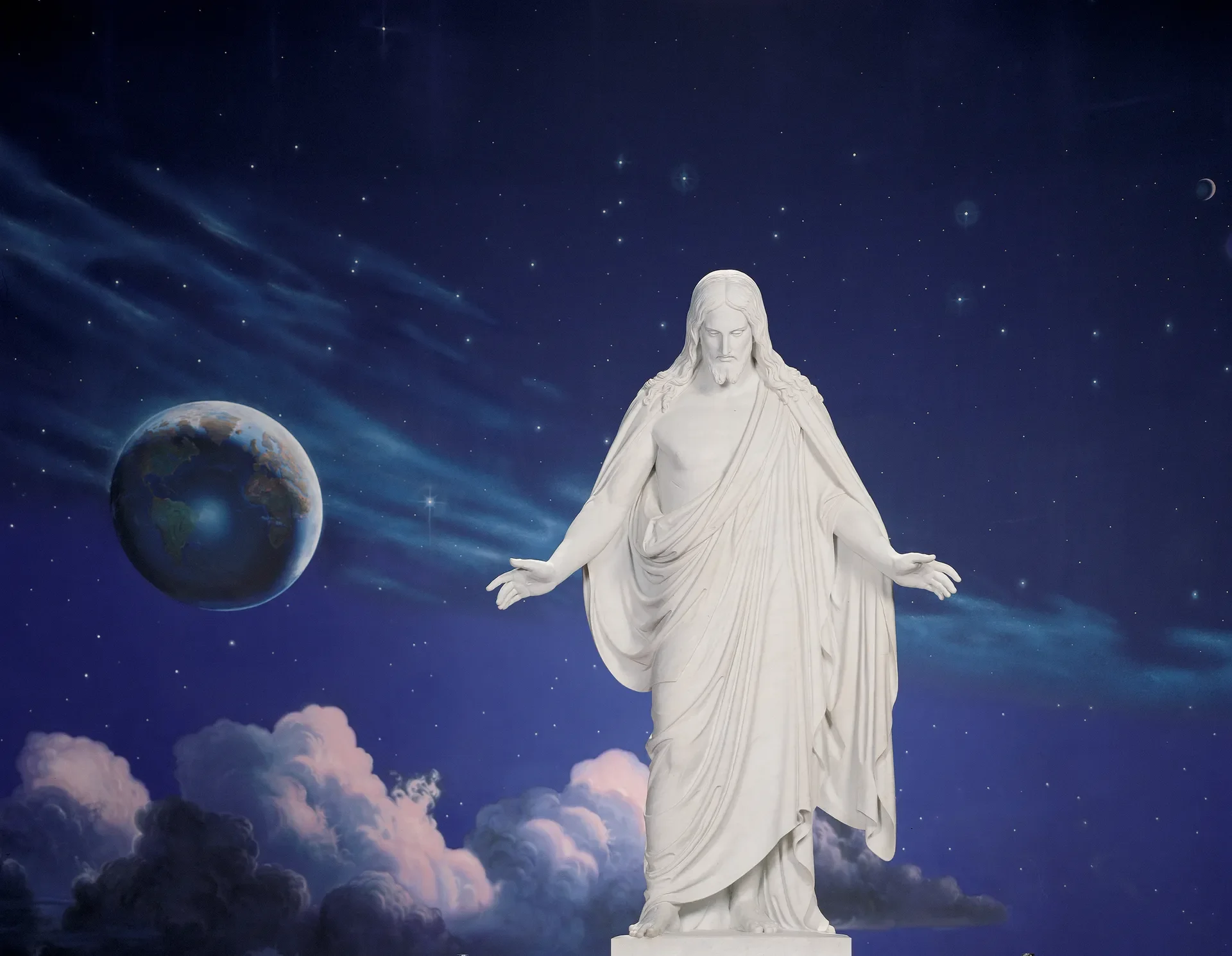
Photo of the “Christus” statue. (Image sourced from churchofjesuschrist.org.) [Original statue carved by Danish sculptor Bertel Thorvaldsen 1770-1844]
The word grace, as commonly used in our society, means: “elegance or beauty of form, manner, motion, or action such as we watched her skate with effortless grace across the ice. Synonyms include class, refinement, charm, attractiveness” (Dictionary.com). Theologically grace has a far more powerful and significant meaning.
Grace, in the Christian world, is an essential doctrine of salvation. It is most often understood by Christians to be “the freely given, unmerited favor and love of God.” Alone, this definition of grace leads to misunderstanding, and it confuses this essential doctrine. Certainly, grace is a free gift, and it is so valuable that there is no price we could pay for it. However, we must do all we can to keep the commandments, but because of our fallen nature we fall short. The Lord’s grace makes up the difference in our quest for eternal life.
Because of living prophets and latter day scriptures we can understand grace in a more complete and powerful way. We believe grace is the enabling power of Jesus Christ. It is the grace of Jesus Christ that enables us to do all things that are expedient in the sight of God. The LDS Bible Dictionary defines grace as follows:
“The main idea of the word grace is divine means of help or strength, given through the bounteous mercy and love of Jesus Christ.
“It is through the grace of the Lord Jesus, made possible by His atoning sacrifice, that mankind will be raised in immortality, every person receiving his body from the grave in a condition of everlasting life. It is likewise through the grace of the Lord that individuals, through faith in the Atonement of Jesus Christ and repentance of their sins, receive strength and assistance to do good works that they otherwise would not be able to maintain if left to their own means. This grace is an enabling power that allows men and women to lay hold on eternal life and exaltation after they have expended their own best efforts.
“Divine grace is needed by every soul in consequence of the Fall of Adam and also because of man’s weaknesses and shortcomings. However, grace cannot suffice without total effort on the part of the recipient. Hence the explanation, “It is by grace that we are saved, after all we can do” (2 Nephi 25:23). It is truly the grace of Jesus Christ that makes salvation possible. This principle is expressed in Jesus’ parable of the vine and the branches (John 15:1-11)”(LDS Bible Dictionary, Grace, emphasis added).
Robert Millet wrote: “A person cannot earn the grace of God; one earns a paycheck. Grace is God’s unearned divine assistance, unmerited divine favor, the Father and the Son’s enabling power, a divine strenght and an empowered will to do that which we could never do for ourselves.
“To put it simply, the Lord’s [grace] does more than fix the celestial books and balances the scales of jusice and mercy. It even does more thanforgive our sins. It rehabilitates, regenerates, renews, and transforms human nature. Christ makes us better, worlds better, than we would have been had there been no fall. Redeemed humanity will rise far higher hereafter than any unfallen humanity might have done.”
The Apostle Paul frequently wrote of Grace. I believe Paul’s most understandable teaching on grace is found in 2 Corinthians 12. Here Paul referred to “a thorn in the flesh”
(vs 7) which was some kind of a physical ailment. Paul continued: “For this thing I besought the Lord thrice, that it might depart from me. And he said unto me, My grace is sufficient for thee: for my strength is made perfect in weakness. Most gladly therefore will I rather glory in my infirmities, that the power of Christ may rest upon me.
Therefore I take pleasure in infirmities, in reproaches, in necessities, in persecutions, in distresses for Christ’s sake: for when I am weak, then am I strong” (2 Corinthians 12:8-10).
Good works, by those who are accountable, is essential for salvation. By believing the truths of Gospel of Jesus Christ, and repenting of our sins, and being baptized in water, and receiving the gift of the Holy Ghost, a person is on the covenant path to eternal life. (See 2 Nephi 31:1-18). There after, his progress along the path is achieved by doing good works. (See 2 Nephi 31:17-21). Ancient prophets affirm the importance of good works:
“What doth it profit, my brethren, though a man say he hath faith, and have not works? Can faith save him?... Faith, if it hath not works, is dead, being alone…For as the body without the spirit is dead, so faith without works is dead also” (James 2:14-26).
“Remission of sins comes in the first instance by repentance and baptism, but it is retained by continued good works” (Bruce R. McConkie, Mormon Doctrine, Good Works). To support this doctrine Elder McConkie quotes King Benjamin in Mosiah 4:26-27:
“And now, for the sake of these things which I have spoken unto you—that is, for the sake of retaining a remission of your sins from day to day, that ye may walk guiltless before God—I would that ye should impart of your substance to the poor, every man according to that which he hath, such as feeding the hungry, clothing the naked, visiting the sick and administering to their relief, both spiritually and temporally, according to their wants.
“And see that all these things are done in wisdom and order; for it is not requisite that a man should run faster than he has strength. And again, it is expedient that he should be diligent, that thereby he might win the prize; therefore, all things must be done in order.”
Testimony. I testify that the Lord is perfectly gracious, and that He grants His grace (His enabling power) to men and women proportionately as they keep His commandments.
I also testify that all things that have life on the earth exist because of His grace (His enabling power). I further testify that through His grace (His enabling power) all will be resurrected, and those who love and serve Him, and keep His commandments will receive, through His grace (His enabling power) the greatest gift of God, even eternal life. Finally, through His grace (His enabling power) those He finds worth will be invited to live eternally in His presence.
Released on September 7th. 2026.