
Lessons of 2026
Lesson No. Thirteen
Unity is the Goal and Easter Makes it Possible
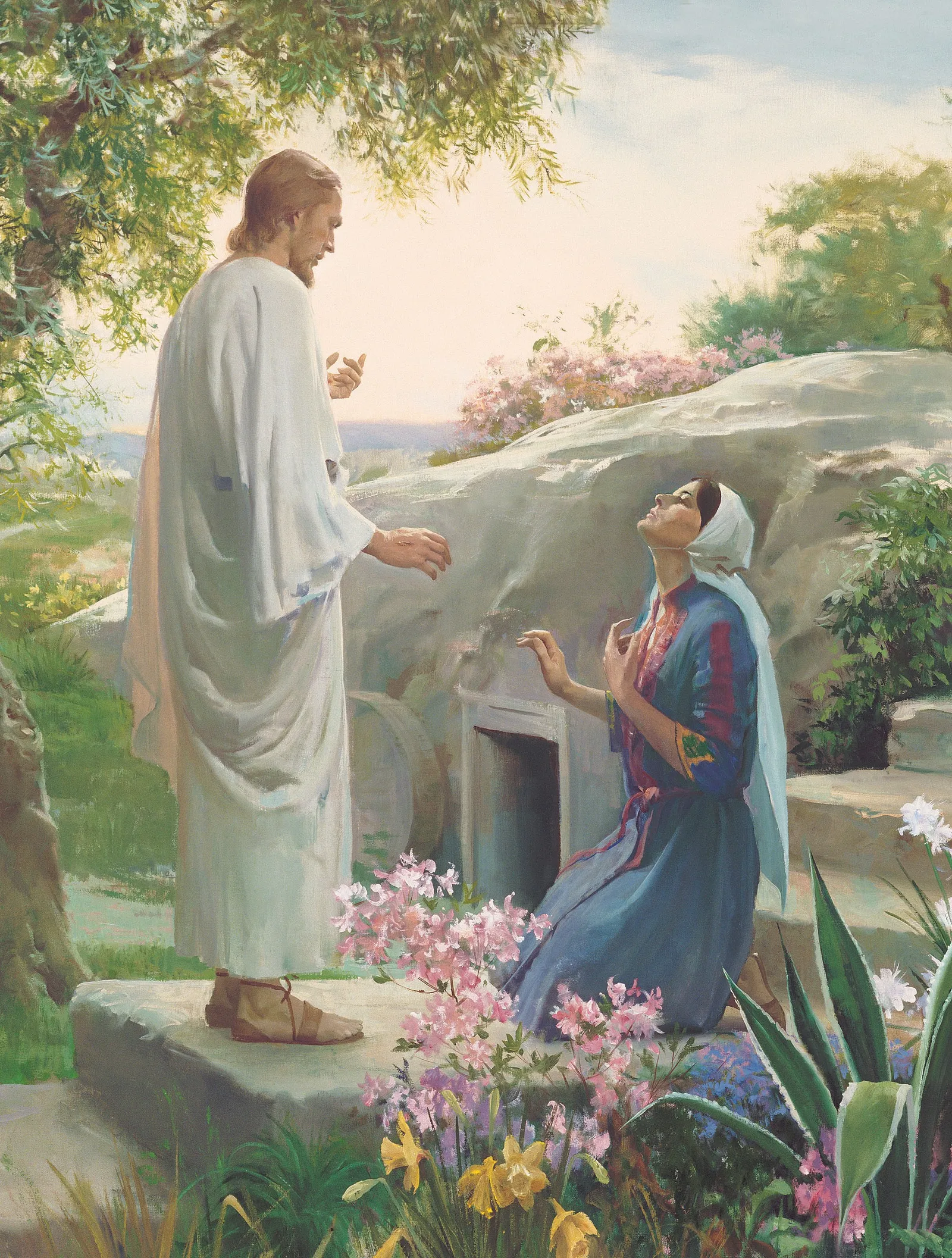
“Mary and the Resurrected Lord” by Harry Anderson.
We live in a world full of contention. There are political and thought leaders in many countries who focus on differences and encourage contention. Contention and confusion seems to be their oxygen. This is contrary to what Jesus taught: “For verily, verily I say unto you, he that hath the spirit of contention is not of me, but is of the devil, who is the father of contention, and he stirreth up the hearts of men to contend with anger, one with another. Behold, this is not my doctrine, to stir up the hearts of men with anger, one against another; but this is my doctrine, that such things should be done away” (3 Nephi 11:29-30).
The Lord expects His disciples in all ages to be united and different from the world. In His great Intercessory Prayer, just prior to entering the Garden of Gethsemane, Jesus prayed for unity among all those who believe in Him: “Neither pray I for these alone, but for them also which shall believe on me through their word; That they all may be one, as thou, Father, art in me, and I in thee, that they also may be one in us: And the glory which thou gavest me I have given them that they may be one, even as we are one: I in them, and thou in me that they be made perfect in one; and that the world may know that thou hast sent me, and hast loved them, as thou hast loved me. Father, I will that they also, whom thou hast given me, be with me where I am…” (John 17:20-24).
The unity in Church of Jesus Christ of Latter-day Saints is a great evidence of its divinity. There is great diversity and also wonderful unity in the Restored Church of Jesus Christ. Today, there are members of virtually all races and nationalities, and each is a vital member of the whole. We believe that all people are children of the same Heavenly Father, and that cultural differences, that are consistent with the gospel of Jesus Christ, enrich the whole Church. We know that the gospel of Jesus Christ transcends all cultures and peoples.
“For all their differences, Latter-day Saints find comfort in their commonality. Wherever they travel, whether it be Seoul, Sao Paulo or St. Petersburg, members of the Church feel the fellowship of their religious community. They share a common set of beliefs, a familiar vocabulary and a joint commitment to care for one another. Though they may disagree over politics or economics, they grow together as they address differences with understanding and sensitivity.
“Stepping into a Latter-day Saint chapel and hearing the rhythms of a Latter-day Saint worship service can feel like coming home. Sunday services follow the same format, feature similar music and administer the same sacrament. Sermons use the same scriptures, and instructors teach from the same lessons. The same resources are translated and distributed to congregations throughout the Church. And yet each Latter-day Saint internalizes the experience differently. A united gospel culture exists alongside varying individual and societal environments.
“In the end, there are no American Latter-day Saints, European Latter-day Saints, Latin Latter-day Saints, African Latter-day Saints or Asian Latter-day Saints. There are only Latter-day Saints, pure and simple” (Unity in Diversity, News Room Church of Jesus Christ of Latter-day Saints, 25 March 2015).
The reason for the unity in the Church is because the power of the atonement of Jesus Christ changes people’s hearts. The people of king Benjamin experienced this mighty change of heart. They exclaimed, “because of the Spirit of the Lord Omnipotent, which has wrought a mighty change in us, or in our hearts, that we have no more disposition to do evil, but to do good continually” (Mosiah 5:2).
Receiving the ordinances of the temple and keeping our temple covenants unite us, individually and as families, with our Father and our Savior. Near the end of the temple endowment we covenant to give all that we have to the Lord and His work. Then we are symbolically invited into the Celestial kingdom. This is individual salvation. But temple blessings do not end with individual salvation. The greatest blessings of the gospel are received as we take the final step into the sealing room where family exaltation is possible. In the sealing ordinance we are promised all that the Father has if we remain faithful.
In the temple we consecrate all that we have to the Lord and His work, and He gives us all that He has. This is the greatest of all exchanges. We have nothing God wants except our love and willing obedience. He has everything, and He will share it all if we are faithful to the end. This is the ultimate unity. We become one with our families and with the Lord Jesus Christ. He is one with the Father, and in this way we are all one together.
“The word ‘atonement’ describes the setting ‘at one’ of those who have been estranged and denotes the reconciliation of man to God” (Atonement, LDS Bible Dictionary). The definition of “ment” is “the action or process of doing something” (Britannica Dictionary). Atonement means setting “at one” man and God through the atoning sacrifice of Jesus Christ.
Testimony. The atonement and the resurrection of the Lord Jesus Christ, which we celebrate at Easter, makes unity and oneness with God possible, and that is what really matters.
Released on April 1st. 2026.