
Lessons of 2026
Lesson No. Thirty-Two
The Atonement of Jesus Christ is the Very Root of Christian Doctrine
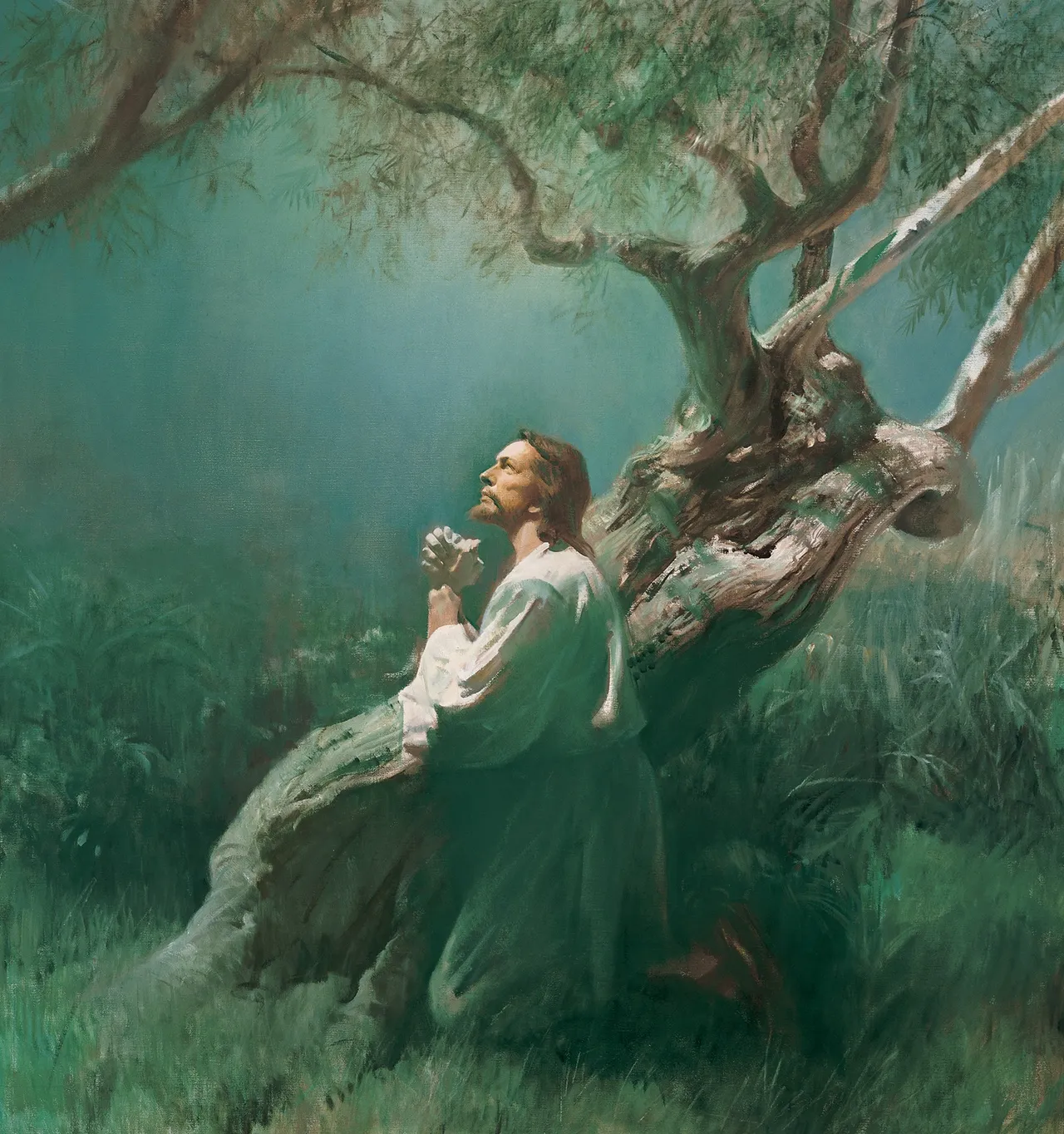
“Christ in Gethsemane” by Harry Anderson. (Image sourced from churchofjesuschrist.org.)
The parable of the Mediator. I have never forgotten how I felt when I listened to Elder Boyd K. Packer as he gave his powerful sermon, The Mediator, at April 1977 general conference. As a part-time lawyer I was serving as a part-time mediator for the National Mediation and Conciliation Service, and I understood the role of a mediator. But more important the parable of The Mediator has stuck with me because it has increased my understanding of the atonement of Jesus Christ, that He mediates between justice and mercy for those who will repent. In this way He is the Mediator between each of us and the Father. If we are able to return to the presence of the Father, it will be because He, as our Mediator, has paid our debt to justice. Because of this the Father can then extend mercy to us without robbing justice. (See Alma 42 for a marvelous discussion on justice and mercy)
“[The Atonement of Christ] is the very root of Christian doctrine. You may know much about the gospel as it branches out from there, but if you only know the branches and those branches do not touch that root, if they have been cut free from that truth, there will be no life nor substance nor redemption in them” (Boyd K. Packer, The Mediator, Ensign, May 1977, 56). Jesus taught this doctrine simply and with perfection when He explained that He is the vine (root) and that we, as His disciples, are the branches:
“I am the true vine, and my Father is the husbandman. Every branch in me that beareth not fruit he taketh away: and every branch that beareth fruit, he purgeth it, that it may bring forth more fruit.
Now ye are clean through the word which I have spoken unto you.
“Abide in me, and I in you. As the branch cannot bear fruit of itself, except it abide in the vine; no more can ye, except ye abide in me. I am the vine, ye are the branches: He that abideth in me, and I in him, the same bringeth forth much fruit: for without me ye can do nothing.
“If a man abide not in me, he is cast forth as a branch, and is withered; and men gather them, and cast them into the fire, and they are burned. If ye abide in me, and my words abide in you, ye shall ask what ye will, and it shall be done unto you. Herein is my Father glorified, that ye bear much fruit; so shall ye be my disciples” (John 15:1-8).
The Church of Christ in Alma’s day, the first church described in detail in the scriptures: “And [Alma] commanded them that they should teach nothing save it were the things which he had taught, and which had been spoken by the mouth of the holy prophets. Yea, even he commanded them that they should preach nothing save it were repentance and faith on the Lord, who had redeemed his people” (Mosiah 18:19-20).
“They taught only from the scriptures and the words of the prophets, and they taught only two principles that are inextricably intertwined: ‘repentance’ that we have the constant need to improve; and ‘faith on the Lord, who had redeemed his people.’ This was not faith in general—and not even faith in Christ as Friend, Good Shepherd, Prince of Peace, or any one of a number of important roles He plays—but faith in a very particular aspect of Christ’s mission: faith in His ability to redeem us, to improve us. He did that through His atoning sacrifice” (Thomas B. Griffith, The Very Root of Christian Doctrine, BYU Devotional, March 14, 2006).
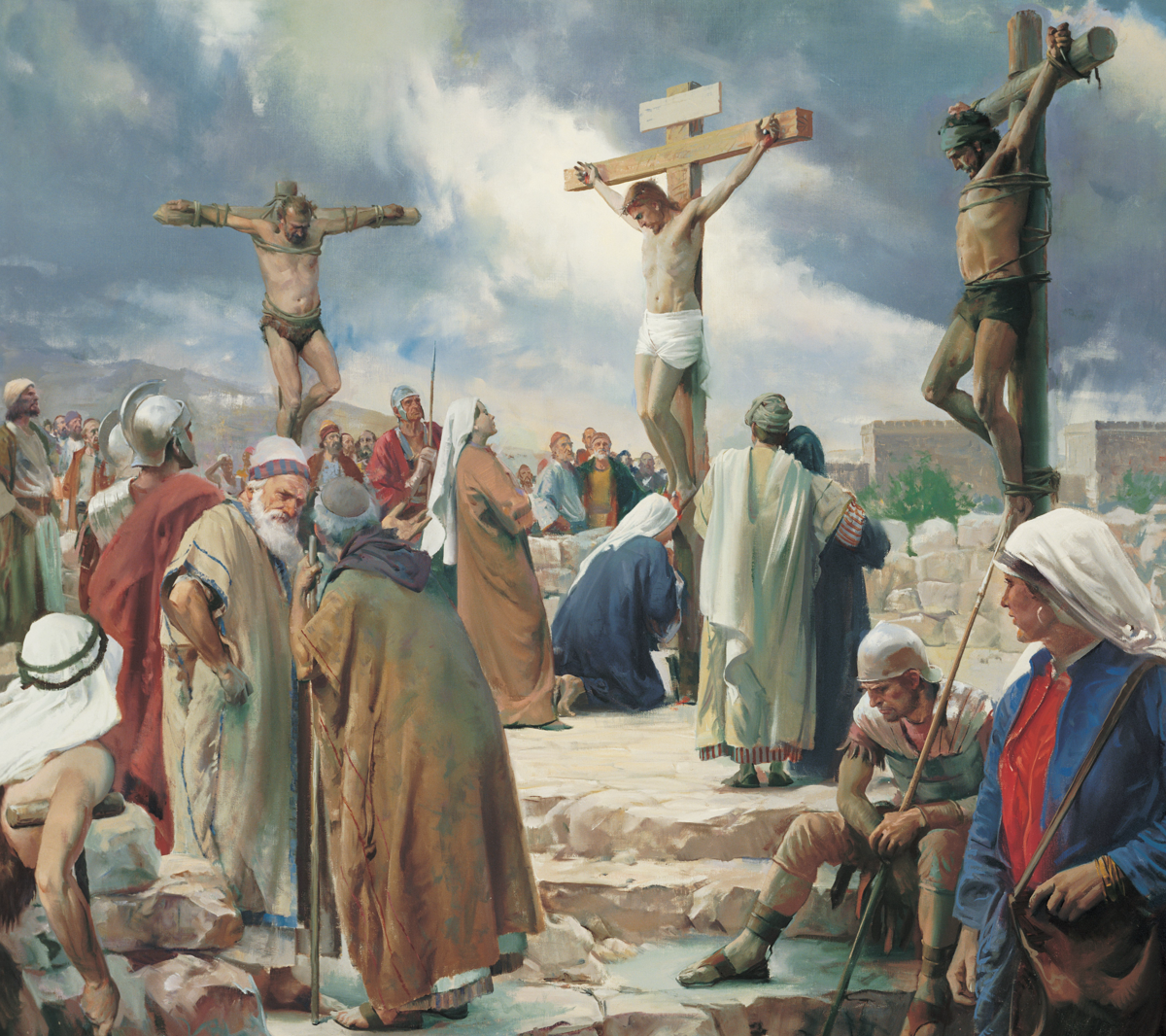
“The Crucifixion” by Harry Anderson. (Image sourced from churchofjesuschrist.org.)
The Prophet Joseph Smith emphasized that the atonement of Christ is the root of all that we believe. Everything else is only appendages: “The fundamental principles of our religion are the testimony of the Apostles and Prophets, concerning Jesus Christ, that He died, was buried, and rose again the third day, and ascended into heaven; and all other things which pertain to our religion are only appendages to it” (Teachings, 121).
The atonement of Christ and the temple. Susan and I renewed our temple recommends today. In the temple recommend interview, we were asked, “Do you have a testimony of the Atonement of Christ and of His role as Savior and Redeemer?” It is significant, considering the many names and roles of Christ, that in this interview we were asked only about about His role as Savior and Redeemer. In the temple the Lord binds Himself to us through covenants, and His role as Savior and Redeemer is central to all the covenants and blessings of the temple.
My teachings must touch the root of the gospel of Jesus Christ, His atoning sacrifice, or there will be no life or substance or redemption in them. For this reason I will make the atonement of Jesus Christ the very root of my teachings. I have written and taught many lessons that, although interesting and motivational, according to Elder Packer’s guide had “no life nor substance nor redemption in them” because they weren’t directly linked to the Atonement of Christ. In one way or another, I intend to link all of my teachings to the atonement of Jesus Christ.
Testimony. I testify of the truthfulness of the words written by Eliza R. Snow:
“How great the wisdom and the love,
That filled the courts on high,
And sent the Savior from above,
To suffer, bleed, and die!
“His precious blood He freely spilt;
His life He freely gave,
A sinless sacrifice for guilt,
A dying world to save.
“How great, how glorious, how complete,
Redemption’s grand design,
Where justice, love, and mercy meet,
In harmony divine!”
(Hymns, no. 195, How Great the Wisdom and the Love, emphasis mine)
Released on August 30th. 2026.