
Lessons of 2026
Lesson No. Ten
Benjamin Franklin - An Exemplary Public Servant and an Enlightened Private Citizen
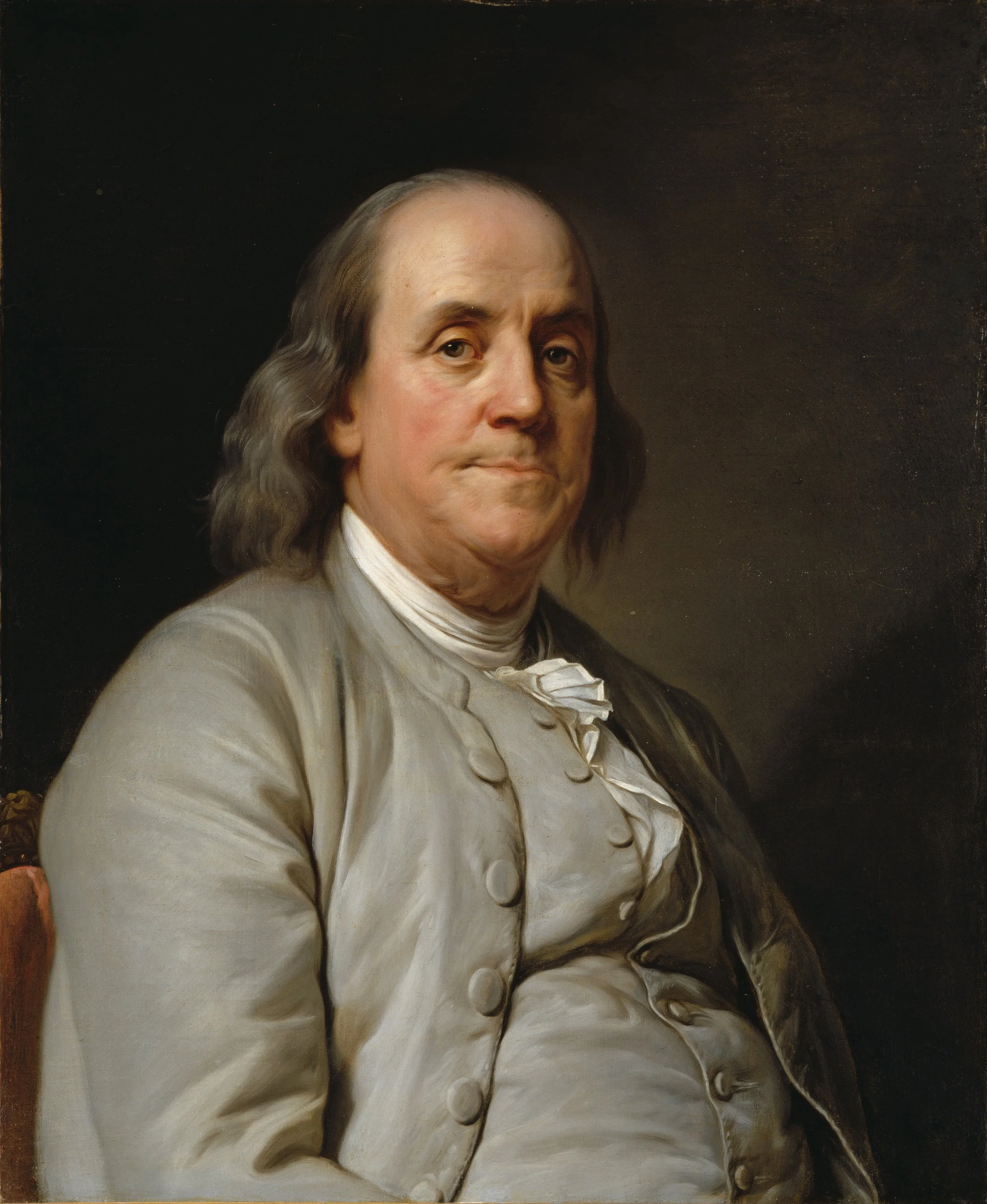
“Benjamin Franklin” by Joseph Siffrein Duplessis.
Note to readers. The Lord said: “I established the Constitution of this land, by the hands of wise men whom I raised up unto this very purpose” (D&C 101:80). Therefore, it seems like a good idea to become familiar with the lives of these wise men the Lord raised up.
As we prepare to celebrate the 250th anniversary of the signing of the Declaration of Independence I will write regularly about founding principles and founding personalities. It is noteworthy that the Founding of the United States was primarily the work of those in their 20s and 30s. However, Franklin, born in 1706, was 70 years old when the Declaration of Independence was signed. He was a generation older than Washington, the next oldest Founder, who was 44 when the Declaration of Independence was signed. But it was his character, wisdom, reputation and accomplishments that made him a trusted and influential Founder.
The example of Benjamin Franklin. As we consider where we are in our country as we celebrate the 250th anniversary of the signing of the Declaration of Independence, the life of Benjamin Franklin sets a good example for both private citizens and public servants. His life gives us much to think about and to emulate.
Franklin believed in democracy and doing “your business by the voice of the people”. He was born 100 years before Joseph Smith and was more comfortable with democracy than most others of his time. Franklin’s philosophy in this regard was what the Book of Mormon teaches, "do your business by the voice of the people" (Mosiah 29:26).
Franklin believed in and trusted the judgement of the middle class and the “common man”. Franklin was a tradesman, a printer by profession, and self-educated. He believed in providing opportunities for all people to succeed as best they could based on their diligence, hard work, virtue, and talent. From this attitude came Franklin's most important vision: an American identity based on the virtues and values of the middle class. He had faith in the wisdom of the common man and felt that the new nation would draw its strength from what he called 'the middling people”.
Franklin was a universal man with a multitude of talents and interests.
- He was the most traveled of all the Founders. He was familiar with the nations of Europe and all thirteen colonies. He understood what they had in common and how they differed. He could discuss farming in Virginia and trade economics in Massachusetts.
- He was the most famous scientist of his time. His work on electricity is recognized as ushering in a scientific revolution comparable to what Newton did on gravity.
- He was a great thinker and a practical philosopher. Franklin was a printer by profession and this gave him opportunity to express himself, often anonymously, as with Poor Richard, an almanac he published for many years. Franklin desired to be a better man so he made a list of 12 virtues he thought desirable, and he outlined a way to work on each of them. These included: Temperance, Silence, Order, Resolution, Frugality, Industry, Sincerity, Justice, Moderation, Cleanliness, Tranquility, Chastity. A friend said that he had forgotten a virtue that he needed to work on, so he added Humility.
- He was a successful diplomat who could work with various cultures and different people. As ambassador to both England and France his reputation brought many advantages to his new country. He was comfortable in various cultures and with different people.
Franklin understood the importance of pragmatic compromise. Both sides must part with some of their demands. His accommodating nature promoted conciliation. The need for pragmatic compromise in society in general and in government specifically has never been greater.
Franklin was a religious man - Franklin wrote his own epitaph: "The body of B. Franklin, Printer; (Like the cover of an old book, Its contents worn out, And striped of its lettering and gilding) Lies here, food for worms. But the work shall not be lost: For it will, (as he believed) appear once more, In a new and more elegant edition, Revised and corrected By the Author." One month before he died he wrote in response to questions about his beliefs: "I believe in one God, Creator of the Universe. That he governs it by his Providence. That he ought to be worshipped. That the most acceptable service we render to him is doing good to his other children."
He was also asked whether he believed in Jesus. He responded that the system of morals Jesus provided was "the best the world ever saw or is likely to see....I have some doubts as to his divinity; though it is a question I do not dogmatize upon, having never studied it, and think it needless to busy myself with it now, when I expect soon an opportunity of knowing the truth with less trouble".
Many Founders seemed uncomfortable with religion of their day. This likely resulted from the same confusion Joseph Smith had prior to the First Vision. Franklin has accepted the gospel in the spirit world. His desire to have his temple work performed and being ordained a high priest is outlined in Lesson 8 of Lessons on Freedom and Patriotism – Columbus and the Founders in the St George Temple.
Conclusion - Franklin led the way with regard to educational and social opportunity for all Americans. He instinctively understood the problems that result when people are "distinguished by ranks, according to their riches and their chances for learning" (3 Nephi 6:12). He taught the principles of personal virtue, equality, democracy, and civic responsibility. He intuitively knew that these principles would allow the people and their new nation to prosper. Franklin, born a century before Joseph Smith, was an Elias who prepared the way for a greater work, which is the ongoing restoration of the gospel of Jesus Christ.
Testimony. Benjamin Franklin’s example of a responsible private citizen and an enlightened public servant were essential at the founding of our country. These qualities are even more needed 250 years later.
Released on March 15th. 2026.