
Lessons of 2025
Lesson No. Forty-Nine
In His Holy Name - Christmas 2025
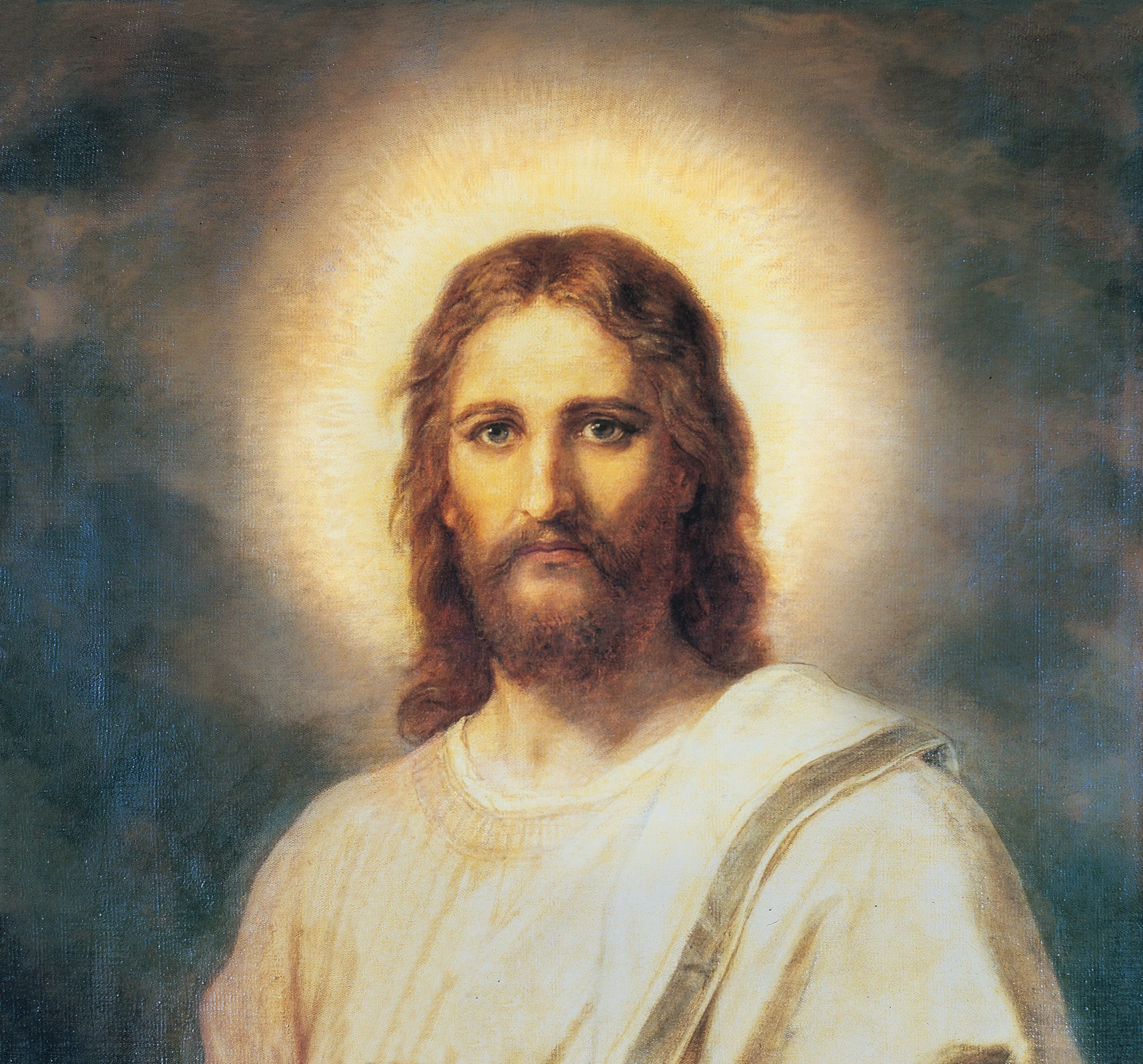
Jesus Christ, our Savior, Lord, and Redeemer. (Image sourced from churchofjesuschrist.org.)
A wonderful way to celebrate Christmas is to proclaim our belief in Christ and to express our love for Him. Ten years ago President Dallin H. Oaks suggested a unique way to celebrate Christmas: “We live in a world where the power and influence of God in our daily lives are downplayed and dismissed and where the need for a Savior is ignored and even mocked. For those who are devoted to the Lord Jesus Christ, there has never been a greater need for us to profess our faith in our Savior, privately and publicly….
“This Christmas season, each of us will have many opportunities to proclaim our belief in Him to friends and neighbors, fellow workers, and casual acquaintances. I hope we will take these opportunities to express our love for Him, to bear our witness of His divine mission, and to renew our determination to serve him. As we do, we join ‘a multitude of the heavenly host praising God, and saying, Glory to God in the highest, and on earth peace good will toward men’” (Ensign, December 2015).
A wonderful way to celebrate Christmas is for Jesus Christ to be the center of our lives. In 1998 Elder Oaks published a book entitled His Holy Name. In the Preface he wrote: “This book is the product of more than a decade of prayerful study and pondering on the meaning and significance of scriptural references to the holy name of Jesus Christ.” I read this book not long after it was published, and I have just finished it again. President Oaks has given light to my understanding and insights on how I can daily make Jesus Christ more central to my life. (Unless noted otherwise, all quotations are from this book)
Use of Name. “The word name occurs in the scriptures about 1,500 times, mostly in reference to Deity or to the name of Deity. Instead of directly referring to God the Father or to His Son, Jesus Christ, many passages of scripture refer to ‘the name of the Lord,’ or to ‘his name,’ or to ‘my name.’ Thus, the scriptures describe praying as calling upon the name of the Lord” (e.g. D&C 65:4).
Name as Identification. “Jesus taught us to pray: ‘Our Father which art in heaven, Hallowed be thy name’ “ (Matt. 6:9; 3 Ne. 13:9). Surely no names evoke more reverence among the devout than the holy names of God the Father and His Son Jesus Christ. Reverence for the Holy Being includes reverence for His holy name…In this usage the word name is used interchangeably with the Being named…and seems to be simply as synonym for God or the Lord Himself.”
Name as Authority or Priesthood or Power. “Many scriptural references to the ‘name’ of Jesus Christ seem to be references to the authority or priesthood or power of Jesus Christ.”
- “The prescribed pattern of performing priesthood ordinances is to do them in the name of Jesus Christ.” When we perform an ordinance we do it in the name of Jesus Christ. This means we are performing the ordinance by the power of Jesus Christ.
- I have had the remarkable privilege for 20 years to serve as a sealer. There is not another calling in the Church where a person has such a great and continuing opportunity to perform priesthood ordinances in the name of Jesus Christ or by the power of Jesus Christ.
- Baptism and the sealing ordinances are the only ordinances in the Church that are done “in the name of the Father, and of the Son, and of the Holy Ghost” (3 Nephi 11:25). These ordinances are performed by the power of the Father, and by the power of the Son, and by the power of the Holy Ghost
- Jesus explained the oneness and unity of the Godhead saying “the Father, and the Son and the Holy Ghost are one” (3 Nephi 11:27). Our greatest desire should be to be one with Jesus Christ as He is one with the Father, and to be one with our family and with the Church and its leaders.
Name as Work or Plan. “The most frequent single meaning of the scriptures that refer to the name of the Lord seems to be work of the Lord (or His work or My work). For the purpose, ‘work of the Lord’ includes the entirety of God’s gospel plan for the salvation and exaltation of His children, most notably the Resurrection and Atonement of the Lord Jesus Christ. As the Lord God explained to Moses, ‘For behold, this is m y work and my glory – to bring to pass the immortality and eternal life of man’ (Moses 1:39).”
Name as Essence or Exaltation. “Here the word name signifies the essence of the one named by recalling those numerous occasions where the Lord identifies Himself (or His prophets identify Him) by names that describe one of His qualities.” God said to: “Behold, I am God; man of Holiness is my name; Man of Counsel is my name; and Endless and Eternal is my name, also” (Moses 7:35).
“In other scriptures the Lord described some of His qualities, preceded by the sacred words I am. This can be read as the equivalent of saying ‘my name is.’ “Jesus said unto her, I am the resurrection and the life: he that believeth in me, though he were dead, yet shall he live” (John 11:25). Jesus saith unto him, I am the way, the truth, and the life: no man cometh unto the Father, but by me” (John 14:6). I am the light and the life of the world. I am Alpha and Omega, the beginning and the end” (3 Ne. 9:18).
Willing to take His name upon us. In the ordinance of the sacrament we covenant with the Father that we are “willing to take upon [us] the name of thy Son” (Moroni 4:3; D&C 20:77). There are at least three meanings to be “willing to take upon [us] the name of Jesus Christ:
1. “We take upon us our Savior’s name in this sense when we become members of the Church that bears His name….Similarly, we take upon us the name of Jesus Christ whenever we publicly proclaim our belief in Him…We also take upon us His name – His identity – whenever we act upon our faith in Him.”
2. “By witnessing our willingness to take upon us the name of Jesus Christ, we signify our wiliness to act in His authority and to do His work, which is to bring to pass the eternal life of man. By this means we covenant to accept callings in His Church and to be diligent in fulfilling the responsibilities of those callings.”
3. “The third meaning of our witnessed willingness to take upon us the name of Jesus Christ relies on the fact that what we witness is not that we take upon us His name but that we are willing to do so. This meaning must therefore relate to some future event of status that is not self-assumed, but depends on the authority of initiative of the Savior Himself. Only upon His action will we actually take His holy name upon us in this important sense.
This Christmas and throughout the coming years, I affirm my willingness to take upon me the name of Jesus Christ:
1. I am willing to take upon me the name of Jesus Christ by being identified as His disciple and as a member of the Church of Jesus Christ of Latter-day Saints
2. I am willing to take upon me the name of Jesus Christ by diligently fulfilling the priesthood responsibilities the Lord has given me. This includes my responsibility as a husband, a father, and as a patriarch in a wonderful family. It includes my priesthood responsibly to serve in the House of the Lord, officiating in the ordinances that seal and exalt both the living and the dead. It includes my priesthood responsibility to teach and testify of Christ and His gospel in every opportunity that comes my way. It includes my responsibility to live the law of consecration to seek to build up the Church and kingdom of God on the earth.
3. I am willing to take upon me the name of Jesus Christ by witnessing my determination, by the way I live my life, to do all that I can to come unto Christ and receive the fulness of the Father, which is eternal life, “the greatest of all the gifts of God” (1 Ne. 15:36; D&C 14:7).
Testimony. This Christmas and also in the coming years, we should look for and take advantage of every opportunity, both public and private, to express our love for our Savior, to bear witness of His divine name, and to show our determination to serve Him and keep His commandments.
As a New Year Resolution, I intend to be more aware of how I say the holy names of the Father and the Son in my prayers and in performing sealing ordinances in the temple. Sometimes we say Their names quickly and as a formality, without much thought about either the Father or the Son. With very little effort we can dramatically improve our prayers and the way we perform priesthood ordinances by consciously remembering the Father, who we are addressing, and the Son, in whose name we pray, and then pronounce Their holy names distinctly and reverently.
Released on December 21st. 2025.